14 Calle Galileo
Los pacientes del doctor García14 Calle Galileo is the Madrid residence from which Clara Stauffer’s postwar network sheltered and equipped fugitives, arranged documents and employment, and helped people move through a wider escape system. What appears from outside to be a home receiving familiar visitors develops into an administrative hub: rooms become offices, secretaries handle routine work, and the address joins private hospitality to the circulation of prisoners, papers, and intelligence.
From residence to operating center
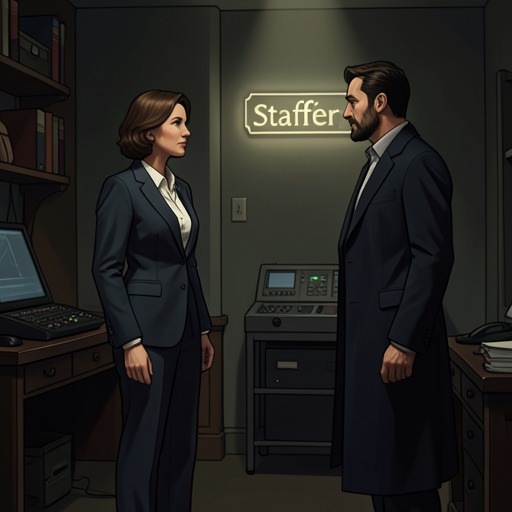
In the summer of 1945, Clara renovated two rooms of the house for office use, installed a new telephone line, and hired two secretaries. She also had new cupboards made and stocked them with men’s clothes in every size and shoes in every size. These preparations changed the character of the residence: it could now receive men who arrived tired and thin, furnish them with clothing, and support work that extended beyond a meal or a night’s welcome.
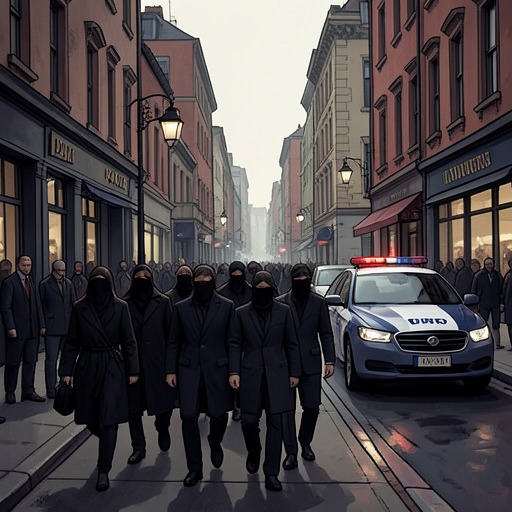
Sole Ruiz, who sometimes went to Porlier Prison to visit her brother, noticed that many of the new visitors looked like prisoners. Some, she understood, had escaped European prisons and crossed the Pyrenees on their own; others had been released from Nanclares. At the house they were welcomed, fed, and given new clothes. They did not sleep there, but appeared to be directed toward lodging and perhaps jobs, returning to the office to conduct further business. The practical sequence—arrival, care, fresh clothing, and onward arrangements—made 14 Calle Galileo a point of passage rather than simply a refuge.
Papers, contacts, and concealment
The office’s work depended on more than material assistance. After several months of activity, a Spanish conscript began visiting almost weekly with one or more sealed envelopes bearing the letterheads of Madrid parishes, especially the parish near the Iglesia roundabout. When an envelope was accidentally left open, Sole found a baptismal certificate bearing German names and a date in 1907. The parish documents supplied a means of giving fugitives Spanish identities, while the regular delivery of envelopes linked the household to sympathetic contacts outside it.
The traffic continued until Sole fled Spain. On one occasion, while taking coffee to the office, she heard a secretary identify a visitor as Jean-Jules Lecomte. The discovery sharpened her suspicions: Lecomte was not German, and the name belonged to a militant member of the Rex Party and the SS who had served as burgomaster of Chimay during the Nazi occupation. A visitor’s name, overheard in an ordinary domestic errand, opened a view of the political figures passing through the house.
Later, Clara showed a new arrival an Allied Control Council circular calling for his arrest. The original document, with its authentic signature and seal, was in her possession. Its presence did more than alert the fugitive to his status: it furnished evidence of close collusion between the operation centered at 14 Calle Galileo and the Francoist state, or at least some of its senior officials. The house was therefore not only assisting men pursued for war crimes; it had access to an Allied document intended to enable their capture.
The network and its international reach
Evidence gathered from the house led investigators to understand that its activity was organized and transnational. Meg Williams persuaded Congressman Sal Burnstein, who had been searching for solid evidence of an established Nazi escape organization, that the Stauffer network was real. The account available through Sole Ruiz’s observations, however valuable, was not enough to prove the network’s full operations or to pressure the United States government and the United Nations. Investigators sought confirmation of identities and roles, including whether Lecomte and Horst Fuldner were the men they were believed to be and whether Clara did more than provide German fugitives with food and clothing.
The suspected route ran from Europe through Spain toward Argentina. The network was believed to provide fugitives with Spanish documents, sometimes using parish baptismal records and Clara’s administrative contacts. Argentina was considered a likely destination because it welcomed European fugitives and maintained close relations with Franco’s Spain, including food shipments that did not respect the Allied blockade. Yet these were still hypotheses requiring an infiltrator and corroborating evidence, not conclusions established by the observations at the house alone.
The later investigation connected the residence to a broader material operation as well. Manuel Arroyo Benítez suspected that shipments Guillermo had agreed to oversee contained art looted from museums and Jewish owners in occupied territories, together with jewelry, antiquities, and perhaps precious metals or currency from the vanished Nazi treasury. He recalled that at his first visit to Cercedilla, Clara had intended to introduce him to a man called Ban or Bam. If the name ended in an m, he reasoned, it could refer to Josef Hans Lazar, known to intimates as Bam. The Allied Control Council had found Lazar to be the one surviving trace of the German embassy’s missing treasures; the allies suspected that he had hidden the embassy’s art, gold, valuables, and unseen archive documents. This placed 14 Calle Galileo within an investigation reaching beyond the movement of people to the concealment and transport of Nazi assets, although the suspected connection remained to be proved.
Infiltration and exposure
Manuel Arroyo’s undercover work turned the house’s ordinary rhythms into sources of intelligence. He accompanied Ingrid Weiss to 14 Calle Galileo almost daily, presenting himself as someone with nothing else to do, and cultivated the secretaries by bringing them the newspaper, sharing coffee, and offering to run errands. During the secretaries’ vacation period, his assistance became so useful that he functioned almost as another member of the office staff. That access let him observe the people and procedures of the operation from within rather than relying only on what a visitor might see.
The details he collected could travel outward. Meg’s findings helped convince Burnstein that the network warranted investigation; the proposed purpose was to establish that Franco’s government sheltered war criminals and thereby create pressure for diplomatic action. The house’s importance thus lay partly in its role as a junction: information gathered through the household could be carried into an American political investigation and used to test the suspected links between Spanish officials, escape routes, and Argentina.
In February 1948, Sefton Delmer entered the building disguised as a German Nazi. The doorkeeper, accustomed to such visitors, directed him without hesitation to Clara’s residence. A young German led him past the office and its secretaries to a room where Herr Vost received him. Vost described Clara as perpetually travelling to help people: securing prisoners’ release from Spanish camps, finding work for those freed, and helping others leave the country. He also disclosed, with pride, that the organization served more than eight hundred people. Delmer then revealed that he was a journalist for the Daily Express and had come to interview Clara, whose activity was described by the Allied Control Council and who was the only woman being sought. The encounter made the scale of the operation explicit while exposing the house to a journalist who had entered under a false identity.
Significance
The address concentrates the network’s central contradiction. Care is tangible there: fugitives are fed, clothed, guided toward shelter, and helped to find work. But the same domestic and administrative routines support concealment, fabricated identities, and the evasion of international arrest. Clothes in carefully stocked cupboards, parish envelopes, a telephone line, secretaries, and an office are not incidental furnishings; together they show how hospitality can be organized into infrastructure.
The building also connects forms of power that might otherwise appear separate. Parish records and state contacts make new identities legible to Spanish institutions; Allied arrest paperwork, held inside Clara’s office, indicates access to information that should have enabled capture; and an undercover visitor can turn the network’s own openness toward its exposure. 14 Calle Galileo is therefore both a sanctuary and an investigative vantage point, a private house whose routines reveal how postwar protection for fugitives could operate through ordinary services and official connections.